

Sewer Line Repair in Dallas, Texas
Sewer line inspection, repair, and replacement with trenchless options available.
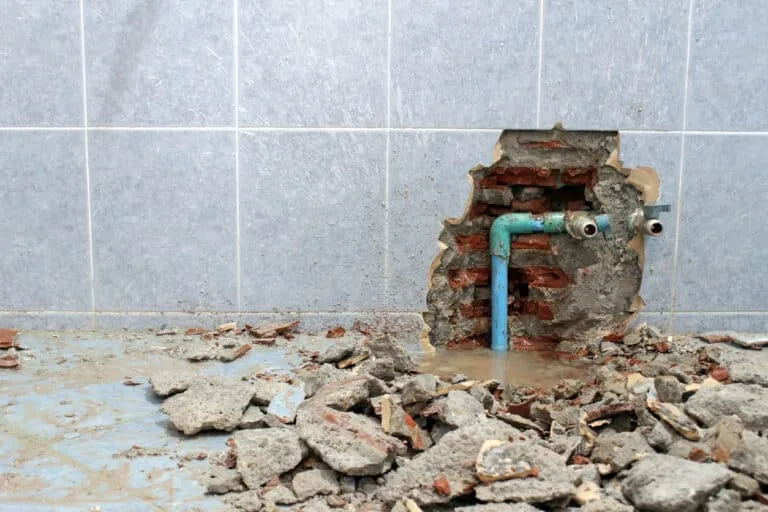
The sewer lateral is the pipe that runs from your home to the city main under the street. It is entirely on private property and entirely your financial responsibility to maintain. Most homeowners never think about it until something goes wrong, and by that point the problem is usually well developed.
Dallas sewer lines face a specific set of stressors. Much of the city's residential sewer infrastructure was installed in the 1950s through 1970s using clay or concrete pipe, which ages, develops cracks at joints, and is highly vulnerable to root intrusion from the mature tree canopy common in older Dallas neighborhoods. The city's expansive black clay soil shrinks and swells with moisture changes, which stresses pipe joints and can cause sections of the line to shift out of alignment and form low spots, called bellies, where solids accumulate and eventually cause blockages.
We perform comprehensive sewer services: camera inspection to diagnose the problem accurately before recommending a repair, mechanical snaking and hydro-jetting for blockages and root intrusion, trenchless pipe lining and pipe bursting for damaged laterals, and conventional open-cut replacement for severely deteriorated lines. Trenchless methods preserve your landscaping and driveway where possible, reducing restoration costs significantly. We pull all required permits and coordinate inspections with the City of Dallas.
Signs You Need Sewer Repair
- Multiple drains throughout the house are slow at the same time, including ones on different floors
- Sewage or rotten-egg odor is present in the yard, near the foundation, or at floor-level inside the house
- A toilet bubbles or gurgles on its own, or after a washing machine or dishwasher cycle finishes
- Raw sewage has backed up out of a floor drain, toilet, or tub drain
- You notice an area of your lawn that is abnormally green and lush compared to the surrounding grass, even during dry spells
- Soft, wet, or sunken ground appears along the path from the house toward the street, with no irrigation system in that area
- A drain line camera inspection has revealed root intrusion, cracks, or a belly in the line
- You are having to snake the same sewer line more than twice in a single year
- The house is more than 40 years old and the sewer line has never been inspected or replaced
- You see rodents appearing inside the home for the first time, rats and mice enter through cracked sewer lines
Experiencing any of these issues? Don't wait — call us now at (214) 555-0123 for same-day service.
Our Sewer Repair Process
Video Camera Inspection
We run a waterproof camera through the sewer lateral from the cleanout at the house to the connection at the street main. The camera transmits a live feed to a monitor above ground, showing us the pipe condition, any root intrusion, crack locations, bellied sections, and the nature of any blockage. This step makes repair decisions accurate rather than speculative, and protects you from paying for work the pipe did not actually need.
Locate and Mark
The camera transmitter allows us to locate the pipeline position and depth from the surface. We mark the line on the ground, which is essential for planning trenchless repairs and for identifying which, if any, landscaping or hardscape needs to be addressed. We also identify the depth at various points, since deeper pipes require more excavation if open-cut becomes necessary.
Clear Blockages
If the issue is a root mass, grease accumulation, or debris blockage rather than structural pipe damage, we address it first with a root-cutting auger or high-pressure hydro-jetting. In some cases, clearing the obstruction restores full function and no further repair is needed. The camera run after cleaning confirms whether the pipe structure is sound or whether underlying damage requires repair.
Select Repair Method
We review the camera findings with you and explain your options. Trenchless pipe lining, which installs a resin-coated liner inside the existing pipe, works well for pipes with cracks and minor root intrusion that are otherwise structurally intact. Pipe bursting replaces the old pipe by pulling a new one through it. Open-cut replacement is necessary for severely crushed, misaligned, or bellied pipe that trenchless methods cannot address.
Complete the Repair
We pull the required City of Dallas permit and complete the repair per local code. Trenchless work typically takes one to two days. Open-cut work, including excavation, pipe replacement, and backfill, typically takes two to four days depending on line length and depth. We coordinate final inspection with the city before backfilling or closing access.
Final Camera Verification
After the repair is complete, we run the camera through the full length of the repaired section to verify the work. For trenchless linings, this confirms the liner has cured completely and is smooth with no wrinkles or gaps. For open-cut repairs, it confirms proper pipe slope and confirms no remaining joint offsets or debris before the trench is closed.
What Dallas Homeowners Say
Hear from homeowners we've served across the Dallas metro.
"Called at 11pm for a burst pipe and they had someone at my house within 45 minutes. Saved my hardwood floors from serious water damage. Worth every penny."
"Had a slab leak that three other plumbers couldn't find. Hydro Pro Plumbing used their camera equipment and located it in under an hour. Professional, clean, and honest about the repair options."
"Our water heater died on a Saturday morning. They came out the same day, gave us a fair quote, and had a new unit installed by 3pm. The crew was respectful of our home and cleaned up everything."
Ready to Fix Your Sewer Repair Problem?
Don't let the issue get worse. Call now for fast service, a free estimate, and Dallas's most trusted team.
(214) 555-0123
- No obligation free estimate
- Same-day service available
Or request a callback
Serving Dallas & Surrounding Areas
We provide sewer repair services throughout the Dallas Metro, including:
- Allen, TX
- Arlington, TX
- Carrollton, TX
- Cedar Hill, TX
- Coppell, TX
- Dallas, TX
- DeSoto, TX
- Duncanville, TX
- Euless, TX
- Farmers Branch, TX
- Flower Mound, TX
- Fort Worth, TX
- Frisco, TX
- Garland, TX
- Grand Prairie, TX
- Grapevine, TX
- Highland Park, TX
- Highland Village, TX
- Irving, TX
- Keller, TX
- Lancaster, TX
- Lewisville, TX
- Little Elm, TX
- Mansfield, TX
- McKinney, TX
- Mesquite, TX
- Murphy, TX
- North Richland Hills, TX
- Plano, TX
- Prosper, TX
- Richardson, TX
- Rowlett, TX
- Sachse, TX
- Southlake, TX
- The Colony, TX
- University Park, TX
- Wylie, TX
Call (214) 555-0123 to confirm we serve your area.
Sewer Repair FAQ
Common questions about our plumbing services in Dallas, Texas.
How much does sewer line repair cost in Dallas?
Costs vary significantly based on what the camera finds and what method is required. Clearing a root blockage with hydro-jetting runs $300–$600. Trenchless pipe lining for a typical residential lateral runs $4,000–$8,000 depending on line length and pipe diameter. Pipe bursting is in a similar range. Open-cut sewer replacement, including excavation, permit, new pipe, and backfill, typically runs $5,000–$12,000 for a standard residential lateral, and can exceed that for deeper or longer lines. We provide a detailed written estimate after the camera inspection, before any work is committed.
What is trenchless sewer repair and does it work in Dallas?
Trenchless sewer repair replaces or rehabilitates a damaged sewer line with minimal excavation. The two main methods are pipe lining, which pulls a resin-coated felt tube through the existing pipe and inflates it to cure against the pipe walls, creating a new pipe inside the old one, and pipe bursting, which pulls a new pipe through the old one while simultaneously fracturing and displacing the old pipe outward. Both methods work well in Dallas clay soil. The main limitation is that severely bellied, completely collapsed, or heavily offset pipe often requires conventional open-cut work because trenchless equipment cannot navigate those conditions.
How do I know if I need a sewer line repair or just a cleaning?
A sewer camera inspection tells you definitively. If the line shows a clean pipe with a grease clog or root mass that can be mechanically cleared, you need a cleaning. If the camera reveals cracks, pipe separation, bellied sections with standing water, significant root intrusion through broken joints, or corroded pipe walls, you need a structural repair. The distinction matters financially. We never recommend a repair without showing you the camera footage that supports it. A camera inspection typically costs $150–$300, and we apply it toward the repair if you proceed.
Whose responsibility is the sewer line from my house to the street in Dallas?
The sewer lateral from your home to the city main connection at the property line, or in some cases to the main in the street, is the homeowner's responsibility. The City of Dallas is responsible for the main sewer lines in the street. This means all repair and replacement costs for the lateral fall to you. Dallas Water Utilities does have a Sewer Lateral Assistance Program for qualifying lower-income homeowners, so it is worth calling 311 to ask about eligibility if cost is a concern.
Can tree roots really crack my sewer line?
Yes, and it is one of the most common causes of sewer line problems we find on camera in Dallas. Tree roots do not actually crack pipes to get in. They detect moisture vapor escaping from pipe joints and penetrate tiny existing gaps and cracks. Once inside, they grow aggressively, filling the pipe and eventually cracking the pipe walls from the inside outward. Live oaks, cedar elms, willows, and hackberries, all common in Dallas yards, are particularly aggressive. Early-stage root intrusion can be cleared with a root-cutting cable or hydro-jetting. Advanced root damage usually requires liner installation or pipe replacement.
How long does sewer line repair take?
A camera inspection takes 45–90 minutes. Hydro-jetting a clear blockage adds another 30–60 minutes. Trenchless lining takes one full day for curing, plus site preparation and post-cure camera verification, so plan for 1–2 days total. Open-cut sewer replacement depends heavily on line length and depth but typically runs 2–4 days for a standard residential lateral. We coordinate permit inspections with the City of Dallas, which can add time to the schedule if an inspector is not available same-day.