

Repiping Services in Dallas, Texas
Whole-home and partial repiping with copper or PEX for aging or failing pipe systems.
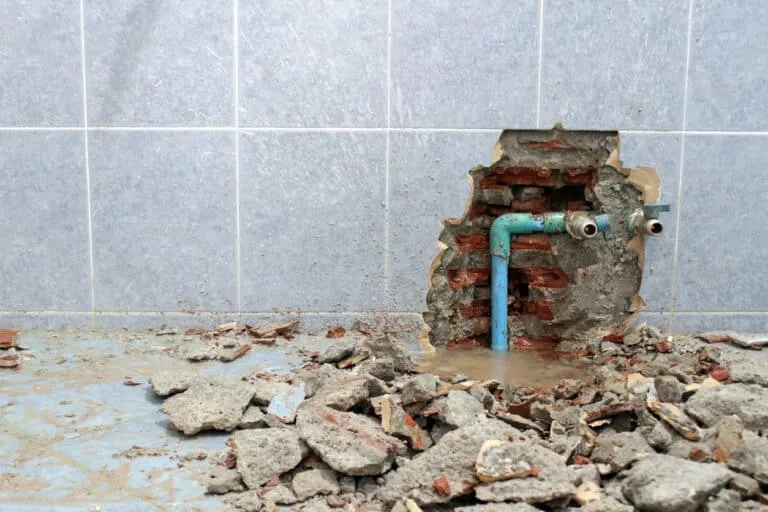
Most plumbing systems are designed to last 40–70 years. Many Dallas homes built before 1990 are approaching or past that threshold, and the signs are unmistakable: persistent low water pressure, discolored water, recurring pinhole leaks, and pipes that have already been patched multiple times. At some point, continued spot repairs cost more than a comprehensive repipe.
Dallas has several generations of pipe materials in the ground across different neighborhoods. Older homes in East Dallas, Oak Cliff, and Irving-area suburbs often have original galvanized steel supply lines that have been corroding from the inside out for decades. Homes built in the 1970s through mid-1990s may contain polybutylene pipe, a gray plastic material that was recalled due to widespread failures but is still found in tens of thousands of North Texas homes. Copper repiping from the 1980s and 1990s is aging into pinhole leak territory in areas with more aggressive water chemistry.
We repipe with two materials: copper, which offers the longest proven service life and has natural antimicrobial properties, and PEX (cross-linked polyethylene), which is flexible, freeze-burst resistant, and significantly faster to install. Most of our Dallas repiping work uses PEX for supply lines, with copper for specific applications where clients prefer it. We work through your walls with minimal openings, restore all drywall, and protect flooring throughout the project.
Signs You Need Repiping
- Your home has galvanized steel pipes and the water runs brown or rust-colored when first turned on in the morning
- The pipes in your home are gray, flexible, and were installed before 1995, which is a strong indicator of polybutylene pipe
- You have had three or more pinhole leaks in the copper supply lines within the past two years
- Water pressure has declined noticeably throughout the entire house, not just at one fixture, over a period of years
- Hot water smells metallic or takes an unusually long time to clear at the tap, suggesting the water is sitting in corroded pipe
- You open a wall or ceiling for a renovation project and find the pipes inside are heavily corroded externally
- A plumber has told you on more than one repair visit that the adjacent pipe looks like it will fail soon
- Your home is more than 50 years old and the plumbing has never been updated or comprehensively repaired
- You are preparing to sell the home and a pre-listing inspection has flagged the pipe material or condition
- Water tests show elevated copper, lead, or iron levels that do not match your municipal water supply readings
Experiencing any of these issues? Don't wait — call us now at (214) 555-0123 for same-day service.
Our Repiping Process
Whole-System Assessment
Before recommending a full repipe, we do a thorough assessment: water pressure readings at multiple fixtures, an inspection of all accessible pipe, a review of the pipe material and age, and an evaluation of how many pinhole leaks or patches have been performed. In some cases, a partial repipe of the most deteriorated sections makes more sense than a full replacement. We give you honest guidance rather than defaulting to the larger scope of work.
Scope and Material Selection
We walk through the home with you and outline exactly what will be replaced: supply lines from the main shutoff to every fixture, typically. We discuss the choice between PEX and copper based on your priorities, the pipe routing in your specific home, and any local code considerations. For older Dallas homes with slab-routed supply lines, we generally reroute new pipes through the walls and attic rather than going back through the slab.
Protect and Prepare
We lay protective floor covering throughout the work path, mask finished surfaces near access points, and remove any stored items from under sinks and near water heater closets. Repiping generates debris from drywall cuts, and we contain and clean as we go. For most homes, we schedule water shutdowns in the early morning to allow the household to have water during the evening.
Run New Pipe
Working in sections, we run new supply lines from the main shutoff through the walls, connecting each fixture: bathrooms, kitchen, laundry room, utility connections. PEX is run in continuous lengths from a central manifold where possible, eliminating joints inside wall cavities. Each new line is made up to the fixture shutoff valve, which we replace as part of the repipe. Old pipe is typically left in place inside walls rather than removed, which avoids additional damage.
Pressure Test
Before closing any wall openings, we pressure-test the full new system by capping all fixture connections and applying test pressure. We monitor for any drop over a minimum 15-minute hold. A clean pressure test confirms every joint and connection in the new system is leak-free. Only after a passing test do we move to closing the wall openings.
Patch and Restore
We patch all drywall openings with mesh tape and joint compound, feathering them smooth for painting. Larger openings may use drywall replacement panels. We reinstall under-sink cabinetry and fixtures, reconnect the water heater, and restore water service. Most homeowners find the finished result requires only painting over the patched areas. We do a final walk-through with you to demonstrate full water flow and pressure at every fixture before we consider the job complete.
What Dallas Homeowners Say
Hear from homeowners we've served across the Dallas metro.
"Called at 11pm for a burst pipe and they had someone at my house within 45 minutes. Saved my hardwood floors from serious water damage. Worth every penny."
"Had a slab leak that three other plumbers couldn't find. Hydro Pro Plumbing used their camera equipment and located it in under an hour. Professional, clean, and honest about the repair options."
"Our water heater died on a Saturday morning. They came out the same day, gave us a fair quote, and had a new unit installed by 3pm. The crew was respectful of our home and cleaned up everything."
Ready to Fix Your Repiping Problem?
Don't let the issue get worse. Call now for fast service, a free estimate, and Dallas's most trusted team.
(214) 555-0123
- No obligation free estimate
- Same-day service available
Or request a callback
Serving Dallas & Surrounding Areas
We provide repiping services throughout the Dallas Metro, including:
- Allen, TX
- Arlington, TX
- Carrollton, TX
- Cedar Hill, TX
- Coppell, TX
- Dallas, TX
- DeSoto, TX
- Duncanville, TX
- Euless, TX
- Farmers Branch, TX
- Flower Mound, TX
- Fort Worth, TX
- Frisco, TX
- Garland, TX
- Grand Prairie, TX
- Grapevine, TX
- Highland Park, TX
- Highland Village, TX
- Irving, TX
- Keller, TX
- Lancaster, TX
- Lewisville, TX
- Little Elm, TX
- Mansfield, TX
- McKinney, TX
- Mesquite, TX
- Murphy, TX
- North Richland Hills, TX
- Plano, TX
- Prosper, TX
- Richardson, TX
- Rowlett, TX
- Sachse, TX
- Southlake, TX
- The Colony, TX
- University Park, TX
- Wylie, TX
Call (214) 555-0123 to confirm we serve your area.
Repiping FAQ
Common questions about our plumbing services in Dallas, Texas.
How much does repiping a house cost in Dallas?
Whole-home repiping in Dallas typically costs $4,000–$10,000 for a standard single-family home. The range depends on the number of bathrooms, the square footage, the pipe material chosen (PEX is generally less expensive than copper due to faster installation), the complexity of access, and whether the existing pipes run through the slab or through accessible wall cavities. Partial repiping of a single bathroom or wing of the house runs proportionally less. We provide a fixed-price written estimate after the on-site assessment, with no surprises mid-project.
How long does repiping a house take in Dallas?
Most single-family homes in Dallas can be repiped in 2–4 days. A smaller home with two bathrooms and straightforward pipe routing may take 2 days. A larger home with four bathrooms, complex access, or slab-routed pipes that need to be rerouted through walls can take 4–5 days. We sequence the work to minimize the time each day that the water is completely off, typically scheduling shutdowns during morning hours so the household has water pressure in the evenings.
What is the difference between PEX and copper pipe, and which should I choose?
Both are excellent long-term materials. Copper is the proven standard, has been used reliably for 60-plus years in U.S. homes, is rigid, heat-tolerant, and has natural antimicrobial properties. It also has higher material cost and takes longer to install. PEX is a flexible cross-linked polyethylene pipe that has been used extensively in new construction since the 2000s. It is faster to install, less expensive, corrosion-resistant, and more resistant to freeze-burst than copper. For most Dallas homes, PEX offers excellent performance at a lower total cost. If you plan to resell the home in the near term, some buyers and inspectors are more familiar with copper, though PEX is broadly accepted by all major building codes.
Does my home have polybutylene pipe and is it dangerous?
Polybutylene is a gray flexible plastic pipe used extensively in residential plumbing from roughly 1978 to 1995. It was used widely across new construction in the Dallas-Fort Worth suburbs during that period. It is identifiable by its gray color and typically gray or white plastic fittings. Polybutylene was the subject of a class-action settlement in the 1990s after widespread failures attributed to chlorine in municipal water supplies degrading the fittings over time. It is not immediately dangerous, but it has a higher failure rate than other materials as it ages. If your home has poly pipe and it is in the original condition from the 1980s or early 1990s, replacing it proactively is strongly advisable.
Will repiping be covered by my homeowners insurance?
Proactive repiping before failures occur is generally not covered by homeowners insurance, as insurance covers sudden and accidental damage rather than maintenance or replacement of systems that are simply aging. However, if a pipe failure results in water damage to your home, the resulting water damage claim is often covered while the pipe repair itself is not. Some insurance companies will lower your premium or offer a discount once they know aging galvanized or polybutylene pipe has been replaced. We recommend checking with your insurance agent when the project is complete.
Does repiping disrupt the walls and drywall throughout the house?
Yes, some wall openings are required to access and run new supply lines. The number and size of openings depends on the pipe routing in your home and the material we are installing. PEX can be fished through walls in longer runs with smaller openings than rigid copper. Most openings are 4–6 inches at fixture locations, with longer runs sometimes requiring a strip of drywall at blocking points. We patch all openings with drywall compound and tape, leaving surfaces ready for painting. The scale of the restoration is far less than homeowners typically fear, and the finished result is a completely modern, reliable plumbing system.