

Leak Detection Services in Dallas, Texas
Non-invasive leak detection to locate hidden leaks before they cause serious damage.
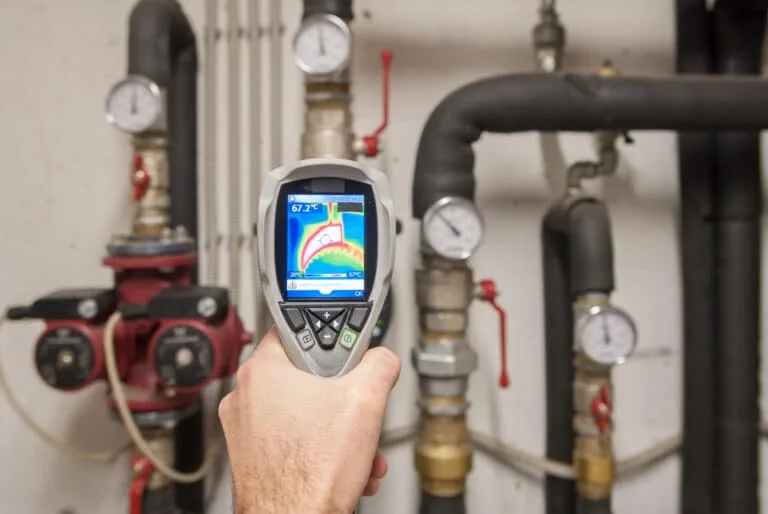
Hidden water leaks are among the most damaging plumbing problems because they often go unnoticed for weeks or months. By the time a leak becomes visible as a wet spot on the ceiling, bubbling paint, or a damp patch on the floor, significant structural damage may have already occurred. The EPA estimates the average household loses more than 9,000 gallons per year to leaks, and many of those are in pipes that are completely out of sight.
Dallas homes present particular leak detection challenges. Slab foundations are the norm across most of the city, which means water supply lines often run through or under the concrete slab. A pinhole leak in a copper supply line under the slab can go undetected for months while silently saturating the subgrade, damaging flooring adhesives, and creating the warm, wet conditions that mold needs. Older neighborhoods like Lakewood, Preston Hollow, and the M-Streets have homes with original copper or galvanized supply lines that are reaching the end of their service life.
Our leak detection process uses electronic listening equipment, thermal imaging, and pressure testing to locate leaks accurately without unnecessary demolition. We find the leak first, then we open only what we need to, keeping repair disruption to a minimum. For slab leaks specifically, accurate location is the difference between a small targeted concrete cut and jackhammering half a room.
Signs You Need Leak Detection
- Your water bill has increased by 20% or more over several months without any change in household usage or occupancy
- Your water meter continues to move after you close every fixture and appliance shutoff valve in the house
- You hear running or trickling water inside a wall or under the floor when all taps are off
- Flooring is warping, buckling, or feels soft and spongy underfoot in a localized area with no obvious water source
- A section of wall has paint that is bubbling, peeling, or developing dark staining without any exterior moisture exposure
- You detect a musty or mildew odor in a room that has no plumbing fixture and no history of flooding
- Hot spots on a tile or wood floor in a room above or near supply lines suggest a hot-water line is leaking under the slab
- A section of your lawn or landscaping remains green and lush during drought conditions, suggesting a supply line is feeding it underground
- Mold or mildew appears on a wall or in a cabinet in a location you would not expect moisture
- Your crawl space or foundation drainage shows water accumulation that does not coincide with rainfall events
Experiencing any of these issues? Don't wait — call us now at (214) 555-0123 for same-day service.
Our Leak Detection Process
Review Water Usage
We start by reviewing your water bills for the past several months and checking your water meter for movement while all fixtures are off. A meter that continues to spin with everything closed confirms an active leak somewhere in the supply system. This establishes whether we are dealing with a supply-side or drain-side issue before bringing out any equipment.
Pressure Testing
We isolate sections of the supply system using shutoff valves and test each section's pressure with a gauge. A section that loses pressure while isolated tells us the leak is within that segment. This narrows down the location before any listening or imaging begins and dramatically reduces the area we need to physically inspect.
Electronic Listening
Our electronic leak detection equipment amplifies the sound of water escaping under pressure through pipes. The technician moves the sensor along the path of the supply line, including through walls and across slab areas, listening for the characteristic frequency change that indicates a leak. Modern equipment can locate a pinhole leak under 4–6 inches of concrete within a foot or two of accuracy.
Thermal Imaging
For leaks in wall cavities and under floors, we use thermal imaging cameras to detect temperature differentials caused by wet materials. A cold water leak shows as a cool spot against the warmer ambient wall temperature. This identifies the affected area without opening any wall surfaces and confirms the electronic findings.
Confirm Location
Once we have converged on the location from at least two detection methods, we confirm the finding before any demolition occurs. For slab leaks, this means marking the exact location on the floor. For wall leaks, it means identifying the smallest possible access point. Confirmation prevents unnecessary cutting and keeps repair costs and restoration work to a minimum.
Repair and Test
After exposing the leak, we complete a proper repair, not a clamp-on patch. We re-pressure test the repaired section before closing the access point to confirm the leak is fully resolved. For homes with older pipe systems where adjacent sections show corrosion, we flag those areas and discuss whether a targeted repair or broader repiping makes more financial sense.
What Dallas Homeowners Say
Hear from homeowners we've served across the Dallas metro.
"Called at 11pm for a burst pipe and they had someone at my house within 45 minutes. Saved my hardwood floors from serious water damage. Worth every penny."
"Had a slab leak that three other plumbers couldn't find. Hydro Pro Plumbing used their camera equipment and located it in under an hour. Professional, clean, and honest about the repair options."
"Our water heater died on a Saturday morning. They came out the same day, gave us a fair quote, and had a new unit installed by 3pm. The crew was respectful of our home and cleaned up everything."
Ready to Fix Your Leak Detection Problem?
Don't let the issue get worse. Call now for fast service, a free estimate, and Dallas's most trusted team.
(214) 555-0123
- No obligation free estimate
- Same-day service available
Or request a callback
Serving Dallas & Surrounding Areas
We provide leak detection services throughout the Dallas Metro, including:
- Allen, TX
- Arlington, TX
- Carrollton, TX
- Cedar Hill, TX
- Coppell, TX
- Dallas, TX
- DeSoto, TX
- Duncanville, TX
- Euless, TX
- Farmers Branch, TX
- Flower Mound, TX
- Fort Worth, TX
- Frisco, TX
- Garland, TX
- Grand Prairie, TX
- Grapevine, TX
- Highland Park, TX
- Highland Village, TX
- Irving, TX
- Keller, TX
- Lancaster, TX
- Lewisville, TX
- Little Elm, TX
- Mansfield, TX
- McKinney, TX
- Mesquite, TX
- Murphy, TX
- North Richland Hills, TX
- Plano, TX
- Prosper, TX
- Richardson, TX
- Rowlett, TX
- Sachse, TX
- Southlake, TX
- The Colony, TX
- University Park, TX
- Wylie, TX
Call (214) 555-0123 to confirm we serve your area.
Leak Detection FAQ
Common questions about our plumbing services in Dallas, Texas.
How much does professional leak detection cost in Dallas?
Leak detection in the Dallas area typically costs $150–$400 for the diagnostic work alone, depending on the scope and what equipment is required. Slab leak detection, which requires specialized electronic listening equipment and sometimes thermal imaging, tends to be at the higher end of that range. Many companies, ourselves included, apply the detection fee toward the repair cost if you proceed with the work. The cost of not detecting a leak promptly is considerably higher, water damage remediation in Dallas averages $2,000–$8,000 depending on the extent of saturation and any mold involvement.
What is a slab leak and how common are they in Dallas?
A slab leak is a leak in a water supply or drain line that runs through or below the concrete slab foundation. They are very common in Dallas because slab construction is the dominant foundation type across most of the city, and older copper supply lines that run through the slab are corroding after 30–50 years of service. The aggressive clay soil that Dallas sits on also shifts seasonally, putting stress on embedded pipes. Signs include warm spots on the floor, running water sounds with all fixtures off, and water bills that climb without explanation. Left untreated, slab leaks damage flooring, compromise the slab itself, and create mold conditions under the floor.
How is a slab leak repaired without tearing up the whole floor?
Modern slab leak repair uses one of three approaches depending on the pipe location, leak severity, and pipe condition. Spot repair cuts a small opening in the slab directly over the leak, repairs or replaces that section, and patches the concrete. Pipe rerouting bypasses the leaking section by running a new line through the wall or ceiling, avoiding any slab work at all. Pipe relining coats the inside of the existing pipe with epoxy to seal pinhole leaks without any concrete cutting. We assess which method makes the most sense based on pipe age and the extent of any corrosion.
Can a small hidden leak really cause that much damage?
A pinhole leak in a 1/2-inch supply line under pressure can lose 200–400 gallons per day. Multiply that over the weeks or months it often takes to detect, and you have thousands of gallons saturating your subgrade or wall cavity. The water itself is one problem. The secondary issue is that sustained moisture in a sealed environment creates ideal conditions for mold growth, which can spread rapidly through insulation and framing before it becomes visible. Structural wood that stays wet for more than 24–48 hours begins to support mold. Early detection of even small leaks is one of the highest-value services a plumber can provide.
Will my homeowners insurance cover a slab leak in Dallas?
It depends on the policy and the cause. Most standard homeowners insurance policies cover sudden and accidental water damage from a burst pipe. They typically do not cover damage from a slow leak that was present for an extended period and was not reported promptly, or from gradual deterioration of old pipes. Some policies cover the cost of accessing the leak, meaning the concrete cutting and patching, but not the pipe repair itself. We recommend calling your insurance company as soon as you suspect a leak, before any work begins, to understand what your specific policy covers.
How do I know if I have a water leak right now?
Turn off every water-using fixture and appliance in your home: faucets, dishwasher, washing machine, ice maker, irrigation system. Find your water meter, usually in a ground-level box near the street at the front of your property, and look at the leak indicator, a small triangular or circular dial on the meter face. If it is spinning, water is moving through the meter even though nothing is running, which means you have an active leak. Write down the meter reading, wait 30 minutes without using any water, then read it again. Any increase confirms a leak. Call us and we will find it.